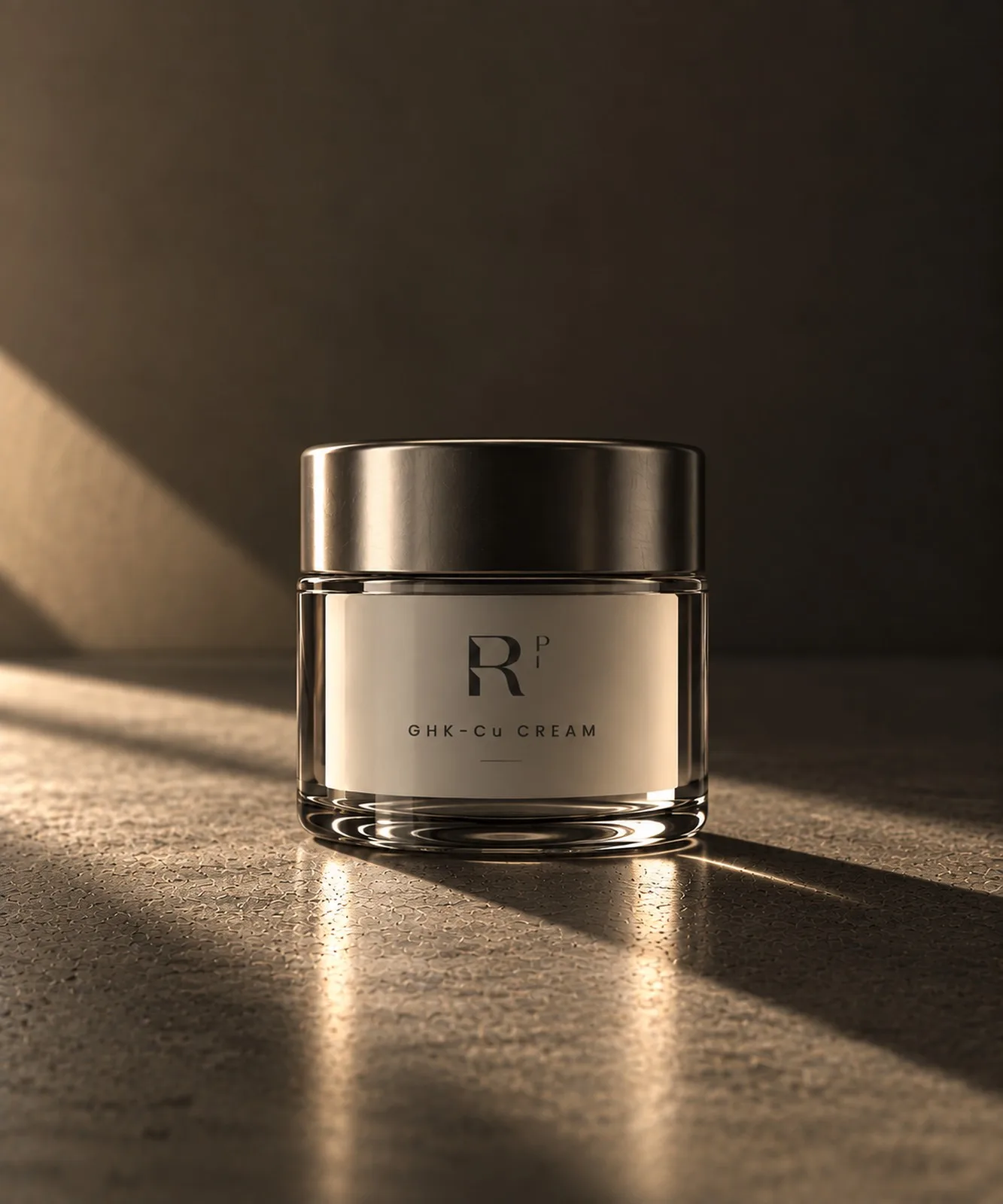
GHK-Cu Cream
A copper peptide your own plasma carries. Concentrations fall by about two thirds between your twenties and your sixties.
- GHK-Cu cream, 30 day supply
- Application guide
- Clinician chat, ongoing
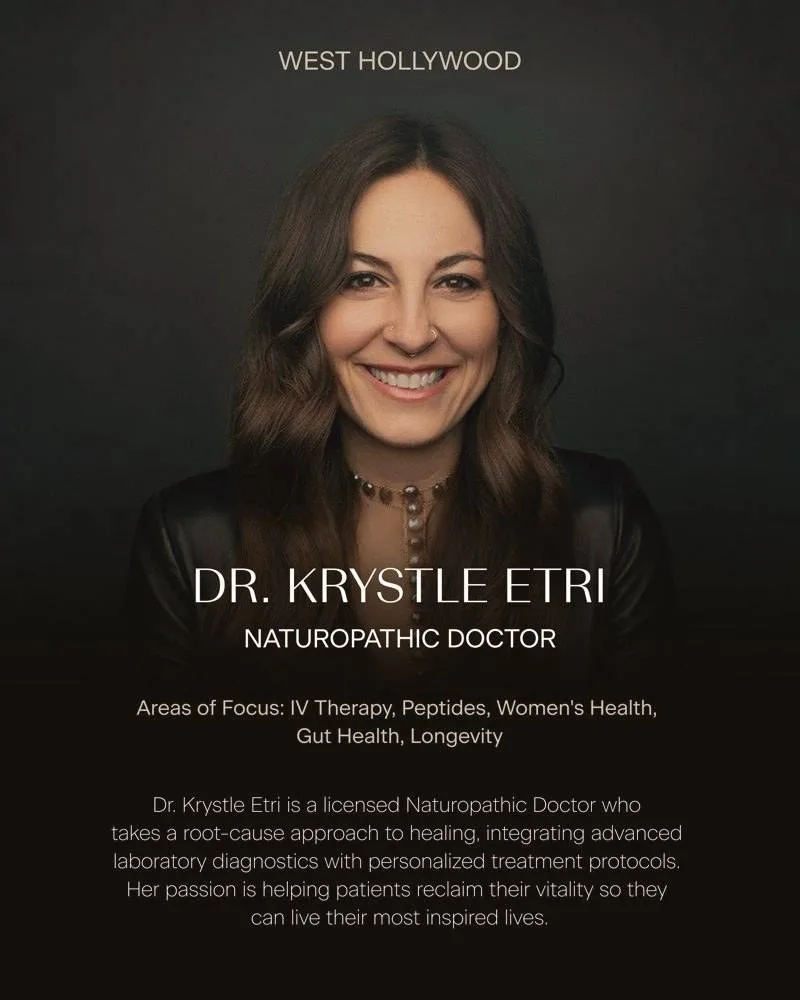
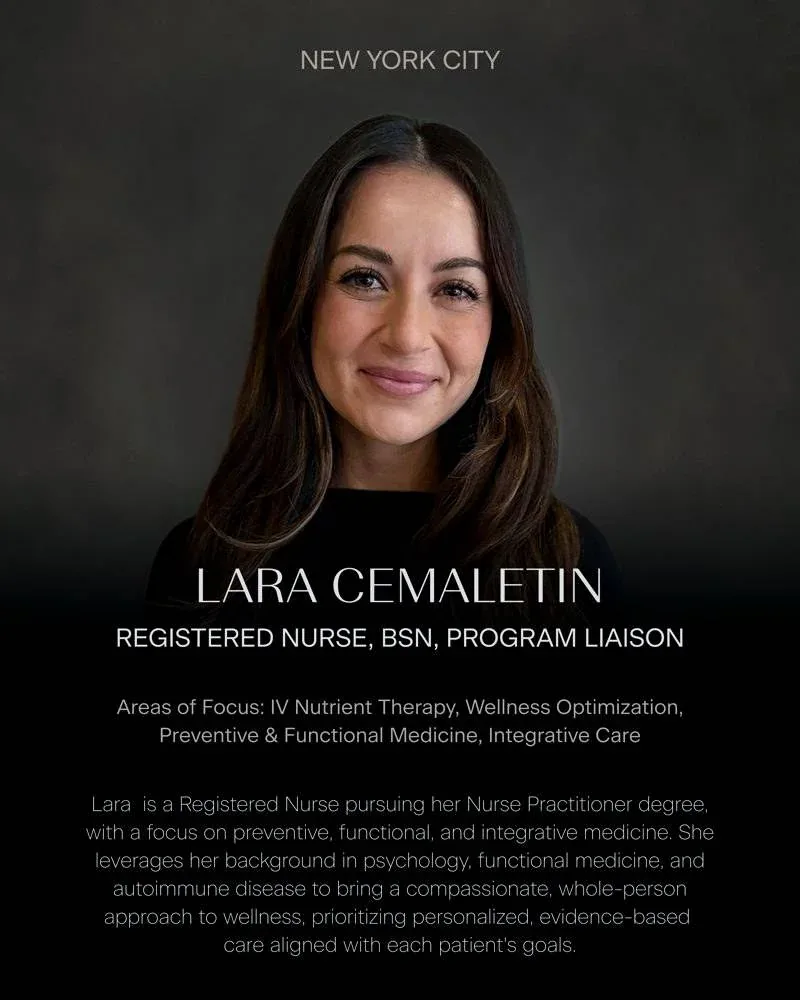
Every order is cleared by a licensed clinician before the pharmacy fills it. Labs can be drawn at any club. Meet the whole team →
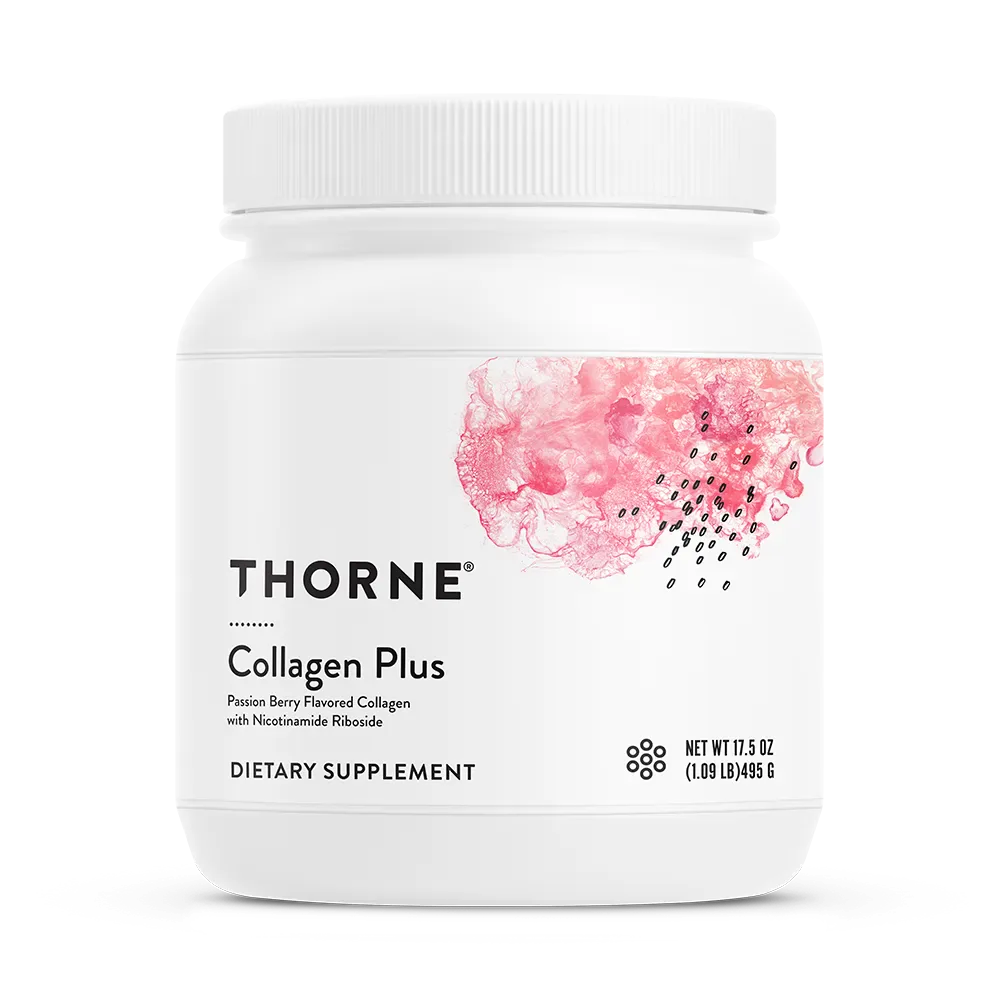
GHK-Cu Cream works better with three things.
GHK-Cu signals collagen production in the skin. Collagen still has to be built from something.
This one is not a synthetic invention
GHK-Cu is a copper binding tripeptide present in human plasma, and its concentration falls by roughly two thirds across adult life. It concentrates at sites of tissue repair, which is what first drew attention to it.
This is the only topical on the menu, and the only product here you can evaluate in the mirror.
- Delivers copper to the enzymes that cross link collagen and elastin, which require it as a cofactor
- Influences the balance between building and breaking down the extracellular matrix
- Supports the skin barrier
- Used at the scalp as well as the face
- The only product here you can judge in a mirror, and the only one that needs twelve weeks before you fairly can
Copper is a required cofactor for the enzymes that cross link collagen and elastin. GHK is the delivery vehicle.
GHK-Cu influences the balance between building and breaking down the extracellular matrix, shifting it toward repair.
Better matrix quality means better water retention and a more resilient surface.

It carries copper where skin can use it.
Apply to clean, dry skin, once or twice daily. Start with 1% for four to six weeks, then move to 4% if your skin tolerates it well. Do not start at 4%. Copper peptides do not mix well with direct vitamin C in the same application, so separate them by time of day.
Expect twelve weeks before a fair judgement. Skin turnover sets that timeline, not the product.
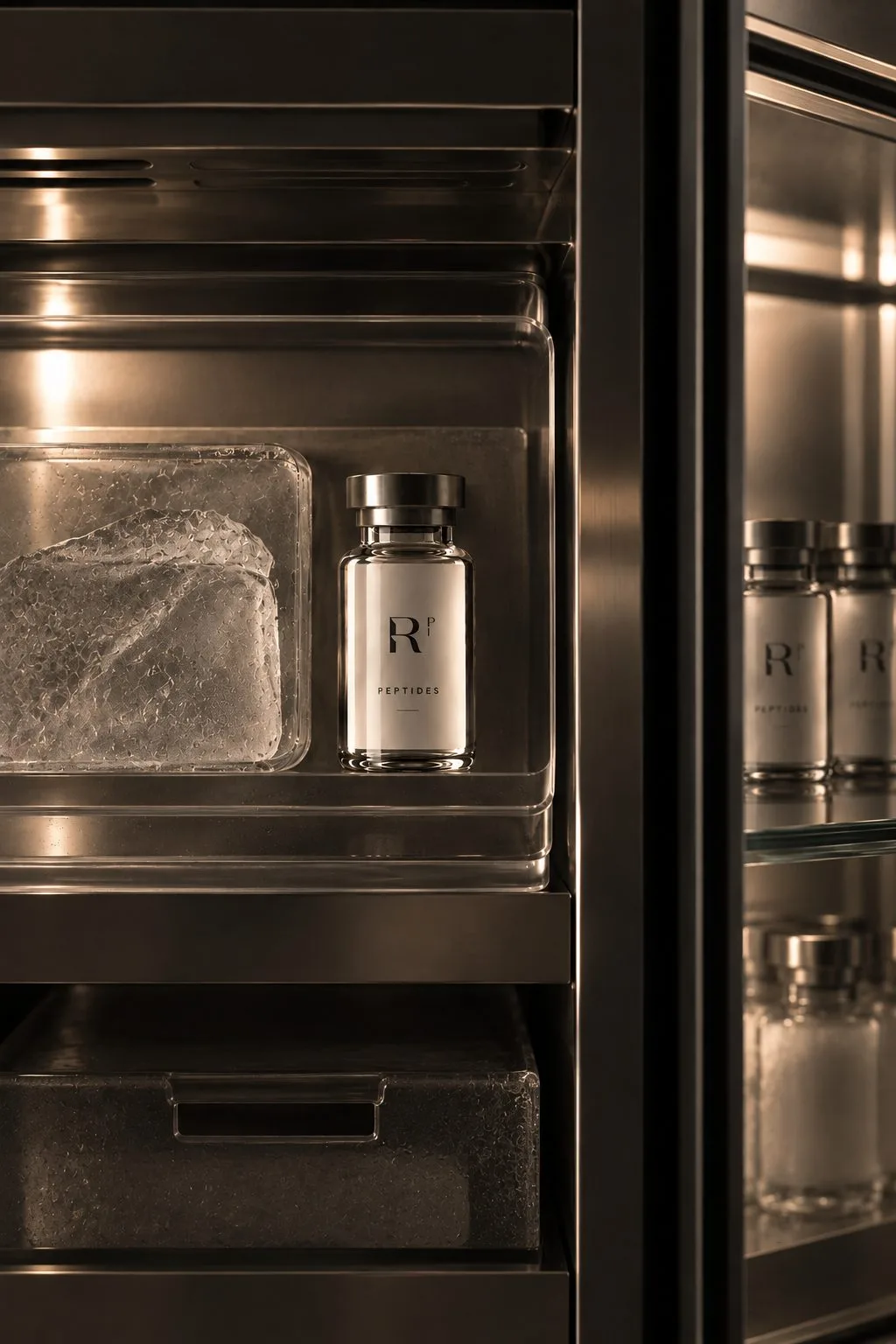
Compounded for you individually by a licensed United States 503A pharmacy that holds LegitScript certification. Every batch is tested before release. The characteristic blue colour comes from the copper and is not a dye.
- Red Light Therapy, which works the same collagen pathway from a different angle. The strongest pairing on the menu
- Hyperbaric Chamber, for tissue repair beyond the surface
- Lymphatic Massage, for anyone whose goal includes facial tone rather than firmness alone
Not on broken or actively inflamed skin. Not in pregnancy or breastfeeding without clinician sign off. Anyone with Wilson's disease or another copper metabolism disorder should avoid copper peptides entirely. Patch test on the inner forearm before facial use if you have reactive skin.
1% or 4%?
Can I use it with retinol?
Can I use it with vitamin C?
Why is it blue?
How long before I see anything?
Can I use it on my scalp?
Will it stain?
Single or three month supply?
Is this the same as the injectable GHK-Cu?

It signals for remodelling.
A clearance is not a consultation.
Every order here is reviewed by a licensed clinician before anything ships. That is a clearance, and it is included. A consultation is a different thing. It happens in person at the club, with a Remedy Place doctor who can order blood work, review your history and build a protocol around the therapies in the room, including the things we do not ship.
Book a Consultation →Clinical services are provided by licensed clinicians. Therapies are prescribed or recommended following a clinical evaluation, where appropriate.
These compounded medications have not been approved by the FDA. The FDA has not evaluated statements regarding the benefits of these therapies. These products are not intended to diagnose, treat, cure or prevent any disease. Individual results vary. Compounded medications carry known and unknown risks that should be discussed with your clinician.